Showing posts with label farming. Show all posts

12.08.2013

Community Supported Agriculture Revisted - 10 Years

2014 marks the 10 year anniversary for Houston's first Community Supported Agriculture Farm: Home Sweet Farm in Brenham.  A time to revisit the work and the communities that we serve.


Farmer Jenny, Fall 2013
A lot has changed in the years serving Houston since we began the first CSA Farm in the area.  We have seen the increase of awareness and the financial commitment of our members has literally helped us grow a farm from scratch without having to go to the bank.  It's been the only thing that we have been able to count on these years.  Lets face it, farming is a big gamble, especially in Texas.  Knowing that we have the secured income for a season allows us to farm full-time for our members and has been essential for our family farm to succeed.

Each year we have adjusted our CSA to meet the demand, adding new dropsites and developing a farmers cooperative to increase local food variety for our members.  Supporting over a dozen family farms, we supply fresh produce, pastured chicken and eggs, grass-fed beef, artisan cheese, honey and hand-crafted artisan foods all sustainably raised in the Brazos Valley!  Its been an exciting adventure as we mentor and support others in their farming dream by developing this new market place.

Flooding in 2009
The weather has always been an issue... years of drought, floods, unusual winters, grasshoppers and heatwaves... its amazing that anything can grow in this climate sometimes.  Membership support has helped us develop irrigation, shade houses and greenhouses to modify our growing environment.  We have researched and shared our growing techniques with 100s of people throughout the years as we strive to rebuild our agricultural community.

Over the last two years, the local food economy has slowed down for us and many small farmers in Texas.  After growing every year, by 2013 our Houston CSA Membership dropped by 50%.  This definitely makes us reevaluate the program.  With the drop in CSA member commitment and the weaker economy, we need to scale back what we are doing by focusing on a smaller supportive membership base.

In 2014, we will be consolidating routes and limiting our CSA Membership to full share members.  We have decided to not offer 1/2 shares at this time as it is essential for our farm to prioritize full share members  in order to make the CSA work financially.  Our 2014 CSA Members will have the option for more local food variety and provisions delivered each week with their vegetables.  Our goal is not to serve more people as we have in the past, our vision is to serve a core group of members more food with better service then ever before.

Horse Farming in 2008
As farmers, we have also set a goal to do more horse farming this year, becoming even more sustainable in our farming practices. We plan to utilize our high tunnels for specialty crops to extend the season and return to more heirloom varieties of vegetables chosen for their nutrition and flavor.  Ultimately, we need to have the farm more financially stable to get us through these economic hard times even if it limits our production by horse farming.

We also want to complete our commercial kitchen on the farm which will allow us to capture any loss of produce by canning, pickling and eventually offering prepared meals and a soup share to our members.

Like always, all of our goals for the farm and work is made possible by our CSA Members!  Its amazing that our family has been able to pursue this dream to be a successful small family farm.  Its an unusual story and an inspiration to many who want to go down the same path making fresh, clean, righteous food available to our community.  We can't express enough our gratitude for the constant encouragement that our members bring to us each season.  It makes it all worth it, and we thank you all for your continued support.

Yours in the local harvest!
Farmer Brad and Jenny


Heirloom Tomatoes Take Priority Again

It's December and its time to order tomato seeds!  We generally like to get ours started the last week of the year.  Originally, we would grow 35+ varieties each season, the possibilities are endless and one can easily get carried away when browsing through the Tomato Growers catalog.  As the years went by and our farm needed to focus on supplying our CSA Members, the selections we grew eventually moved towards better productivity and shipping.  Although these tomatoes are still great compared to grocery store brands, the flavor still cannot hold up to some of the old heirloom varieties.

The changes we made in tomato selections for the CSA was partly due to listening to our customers.  When we got feed back that tomatoes were cracked or didn't seem to hold up to shipping 50 miles to our drop sites, we slowly began to eliminate the more tender varieties, like Brandywine, Carbon and Cherokee Purple.  Its not that we didn't like growing these old fashion favorites... we just didn't enjoy negative complaints and considering that these heirlooms were 50% the productivity and twice the work, it just wasn't worth it as a commercial crop if our customers are not happy.

A few years later, we got bored and decided as a family farm, it was time to get back to our basics.  Its time to get back to growing tomatoes because they are the best tasting.  It may take more labor and effort on our end educating members why our heirloom tomatoes are so special.  Why they are colorfully ripe and something that they may not be used to experiencing.  We want to hear the expression, "these taste like my grandmother's tomatoes!" we want to hear people say, "my kids love your tomatoes and I can't get them to eat anything!"  It would be even more rewarding to hear our customers say, "these tomatoes are expensive, but worth every penny!"

This is the year that we get back into heirloom tomatoes for our Houston CSA and Brenham Market... the unique and better tasting heirlooms are worth it.  No more compromising tomatoes for shipping.  Big ones, pink ones, blackish purple rich ones that you will never see in a grocery store.  The not so perfect weird ones that you can make a meal out of.  Its time to get creative and to stop playing it so safe all of the time.

Get ready for some great tomatoes next spring (and pray for good weather)!

10.28.2012

Pediatrics Association Continues To Lose Credibility

In response to the news article, Pediatricians offer first report on organic foods; I have to comment on how misleading and narrow sighted this report was. While claiming that “organic foods” are not safer or more nutritious then conventionally grown foods, the report admits that “Theoretically, there could be negative effects, especially in young children with growing brains,” and concluding that “organic” fruits and vegetables can reduce pesticide exposure then goes on to admit that no long-term controlled studies have ever been done to study the nutritional differences between the two.
Basically, this was another hit piece based on junk science with the intention of telling people they are unnecessarily concerned about our current industrial food system. The growing “organic” industry is proof that families are concerned about the safety of our food supply, and with the increase of child obesity, diabetes, cancer and many psychological disorders, their concern is well justified.
When it comes down to it, “organic” and conventional food faces the same issues when it comes to freshness. Common sense tells us that local and fresh food will be far superior in nutrition as compared to those that travel 1500+ miles with weeks of refrigeration.
Families who are most concerned about the quality and nutrient density of their food should look at buying from local producers. It’s not only healthier for our families, it’s healthier for our local economy and our local environment. Basically, we need more people working the land and we need to spend more of our food dollars investing in our own local community. Worst case scenario: we eat well.

1.12.2011

Farmer Brad on NaturalNews.tv

In case you missed it... a few weeks ago, we were visited by Mike Adams, The Health Ranger.  Mike had a camera and I had a soap box... you can imagine the result.  Given the opportunity, I sounded off about the potential impacts of the Food Safety Modernization Act on small local farmers.  We have had a great response from around the world.  To check it out... you can view the article and the video interview online at NaturalNews.tv... follow this link... http://bit.ly/hO4nAm

Yours in the local harvest,
Farmer Brad

2.12.2010

Market Growers Symposium - March 11 & 12, 2010

Join us for this two-day event designed to help new and experienced growers get the job done. Network and meet with experts in the field for technical discussions and then experience a hands-on farm tour to deepen your understanding. Lunch includes seasonal surprises prepared by some of the leading Texas chefs promoting local food…

Network and get connected! Market Managers and Distributors can recruit new farmers, expand your local food market and buy direct from family farms in the community. 

Classroom sessions with technical discussions on diversified vegetable farming, disease and pest controls, propagation techniques, marketing, variety selection and more from experienced experts in the field.

Technical Farm Tour at HOMEsweetFARM, a 22 acre diversified CSA vegetable farm serving the Austin and Houston area. Hands-on applications covering horse power on the farm, greenhouse production, bed preparation, soil amendments, cover crops, rotational grazing, irrigation, equipment, planting techniques, distribution, customer care and much more.

Steve Divers      Leslie McKinnon     Dr. Joe Novak      Larry Butler     Judith McGeary
Hans Hansen    Brad Stufflebeam     Ben Godfrey   Chef Joe Apa   Chef Jesse Griffiths


When: March 11 & 12, 2010
Where: Brenham, Texas
Info: visit www.homesweetfarm.com or call 979.251.9922

9.22.2009

Grazing with Portable Fencing

After seeing our portable grazing program during the Symposium a few have asked where to get the supplies:

Solar charger (doing the research I have found this one to be more powerful)… http://www.kencove.com/fence/Solar+Energizers_detail_EMS.php

Charger (this has been sufficient for our 12 acre intensive program)… http://www.premier1supplies.com/detail.php?prod_id=393&cat_id=54

Reels (you will need at least 6 reels, these are the ones we use and are most economical)… http://www.kencove.com/fence/Reels_detail_RNR.php

Twine (this has very high conductivity)… http://www.kencove.com/fence/Twine+(Electric)_detail_R5GW.php

Reel Brackets for wooden posts (also available for T-posts at a higher price)… http://www.premier1supplies.com/detail.php?prod_id=455&cat_id=49

Our favorite insulators for posts… http://www.premier1supplies.com/detail.php?prod_id=24422&cat_id=46

Poultry Netting (We have some 5 years old and they are still working great)… http://www.premier1supplies.com/detail.php?prod_id=20170&cat_id=53 Kencove will be the ones we will try in the future, a little cheaper, and free shipping!!! https://www.kencove.com/fence/Electric+Net+Fencing_detail_NSPCG.php

Everything else you can get locally

- Farmer Brad

PS: tell them HOMEsweetFARM sent you!

6.15.2009

VIDEO: Angel Valley Farm

Enjoy this video of our friends, John and Jo Dwyer of Angel Valley Organic Farm

4.29.2009

Hard Week


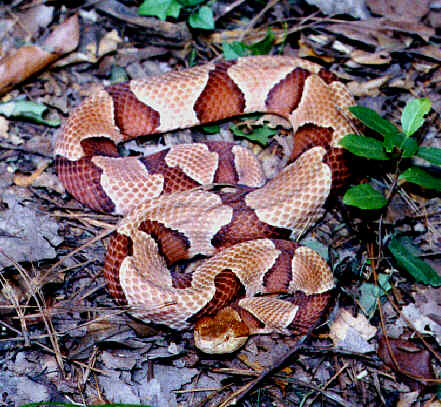
This has been one of our most difficult weeks on the farm to date (at least in my mind). It started on Saturday afternoon when I was bitten by a copperhead snake on the back of my ankle. We rushed to the emergency room just to find out that modern medicine can do nothing other than “pain management” sending me home with a dose of Benedryl and a prescription for antibiotics and Vicodin for the pain (which I took neither). Pain and swelling has left me in bed for 4 days now leaving the farm operations on Jenny’s shoulders – she is such a champ.

We have been treating the snake bite and my entire leg with doses of herbal remedies: black cohosh, echinacea, goldenseal, arnica and plantain as a compress every 2 hours along with an oral dose of all of the above MINUS the arnica. After day 3 the swelling and pain was beginning to improve.

To make the farm life more difficult, it has been raining regularly making our CSA harvest more challenging in the mud while worrying about flood damage to the new crops (11 inches so far with more in the forecast). The family car got a flat and needs to be changed (it is still jacked up after 4 days with no time to take care of it). The livestock needed to be moved to a different pasture. The septic system is backing up due to the saturated ground. We have new baby chicks (8 days old now) needing regular attention. The girls are busy with homeschooling. Customers are showing up at unusual hours for feed and supplies. Flash flooding in the area is demanding more customer care concerning CSA deliveries. Managing COOP orders for this month’s delivery. Not to mention Jenny’s time to nurse me back to health with the treatments to deal with the snakebite; preparing meals for the family, cleaning house and keeping up with all of the phone calls and emails. All the while I lay here helpless unable to stand or walk on my own (knowing we are in the peak of spring planting and the work is extra difficult this week without me). After four days, I’m trying to keep a good attitude. Jenny and the girls are remarkable, as always.

This too will pass, and after Thursday’s CSA harvest and delivery, we may be able to catch our breath with a quiet weekend ahead. Hopefully, by day seven of my injury I may be back on my feet, giving Jenny a much needed break. She deserves it! Hang in there baby.

3.09.2009

People Who Produce Real Things...

“Agriculture’s been a horrible business for 30 years. For decades the money shufflers, the paper shufflers, have been the captains of the universe. That is now changing.

The people who produce real things [will be on top]. You’re going to see stockbrokers driving taxis.

The smart ones will learn to drive tractors, because they’ll be working for the farmers. It’s going to be the 29-year-old farmers who have the Lamborghinis. So you should find yourself a nice farmer and hook up with him or her, because that’s where the money’s going to be in the next couple of decades.”

~ Jim Rogers

By the way, Lamborghini used to make a great tractor, but I will stick with my International. - Farmer Brad

1.22.2009

So you want to farm?


Andy Griffin recently wrote an excellent article that I have to recommend. His advise is wise, and as I have frequently suggested to new farmers... leasing land is worth considering.

Farm on!

The article: http://www.ladybugletter.com/?p=70

12.07.2008

non-GMO Seed Potatoes


We will have non-GMO seed potatoes available in January for pick-up at the farm along with colloidal rock phosphate and other organic amendments to make a successful crop.

More details online... www.homesweetfarm.com/seed_potatoes.htm

Contact me by the end of Dec. if you want to assure availability.

Farm On!

11.04.2008

The Small Farm: Training and Education

This was originally published by The Texas Organic Farmers and Gardeners Assoc (TOFGA). I have had a lot of questions and requests for this information, so I thought I would post it once again since it is no longer available on the TOFGA website. More coming soon, stay tuned.

- Farmer Brad


The Small Farm: Training and Education


The small farm is more than just a dream. It can be a reality, and your vision and decisions in life must have a focus towards that purpose. Our family has been on that path for over fourteen years. We are mainly self-taught, having the single focus and obsession that we could one day have the independent family farm. Now that we are achieving that goal, we would like to share with others our (not always simple) homesteading lifestyle, and how we have achieved that goal. It is rich and rewarding; to work as a family, but the steps can be a long and bumpy journey, definitely worth the perseverance.


Step 1: Acquiring training and education to prepare for your small farm.

Our education has been explored through many avenues. Early on we pursued the collegiate route, to find major disappointment in the institutional system. Our interests focused early upon organic techniques, nutrition, and more holistic approaches towards health and the environment. This led us towards the pursuit of self-education… reading every book and researching every website we could come across. I will try to list the best resources that we have found useful in our search.

Books…

Permaculture: A Designers Manual by Bill Mollison
Family Friendly Farming by Joel Salatin (and any other book by Salatin)
The New Organic Grower by Elliot Coleman
How to Grow More Vegetables by John Jeavons
A Farmer’s Guide to the Bottom Line by Charles Walters
Buying and Setting Up Your Small Farm or Ranch by L.R. Miller
Paddock Shift, Changing Views on Grassland Farming by Allan Nation
The Biological Farmer by Gary F. Zimmer

Magazines…

Acres USA (512) 892-4400 www.acresusa.com
Growing for Market 1(800) 307-8949 www.growingformarket.com
Farming, People, Land, and Community 1(800) 915-0042 www.farmingmagazine.net
Small Farmer’s Journal 1(800) 876-2893 www.smallfarmersjournal.com
The Heirloom Gardener (417) 924-1222 www.rareseed.com

Websites for Research…

Appropriate Technology Transfer for Rural Areas (ATTRA) www.attra.org
A&M has put together a great list of alternative agriculture resources at http://aggie-horticulture.tamu.edu/alternatives/alternativelinks.html.
Alternative Farming Systems Information Center (AFSIC) www.nal.usda.gov/afsic/
There are many other sites to list here for specific topics.

Internships…

Consider an internship/apprenticeship program with an organic farm. ATTRA has a listing on their website (www.attrainternships.ncat.org). You can also find farms advertising directly in many of the magazines I suggested above. International opportunities are available through MESA (Multinational Exchange for Sustainable Agriculture) www.mesaprogram.org and WWOOF (World Wide Opportunities on Organic Farms) www.wwoof.org. I served as the Farm Operations Director for World Hunger Relief, which offers a 12-month internship program in Elm Mott, TX, and the experience was rich and rewarding for the interns and myself. I recommend maybe a shorter program of 3 to 6 months during the peak of production, but you do get a better idea of the big picture when you can experience every changing season on the farm.

Organizations…

Holistic Resource Management of Texas www.hrm-texas.org

Southern Sustainable Agriculture Working Group (SSAWG) www.ssawg.org


Schools/Conferences…

Ranching for Profit is a highly recommended program exploring a more holistic approach utilizing rotational grazing www.ranchmanagement.com

Texas Organic Farmers and Growers Assoc. (TOFGA) host their annual conference, which is always rich with information specific to our state.

Practical Experience…

Nothing beats practical experience. Grow a backyard garden, get a job at a nursery or commercial grower, volunteer at a farm, find a skill that is farm related i.e. carpentry, mechanics, welding, horticulture, marketing, etc. My greatest learning experience was owning and operating a retail nursery and having my own garden every year.


The new farmers need to be innovative and highly motivated to educate themselves in sustainable agriculture. It also helps to visit other farms and to see what other folks are doing. I hope these resources can be help in the pursuit of the small farm.

8.14.2008

HOMEsweetFARM Radio: John Ikerd - Small Farms Are Real Farms - Part 1

Farmer Brad interviews John Ikerd, Professor Emeritus of Agricultural Economics at the University of Missouri, has written extensively on how sustainable farming practices affect and are affected by industrialization, the environment, economics, and communities. He now spends his time writing and speaking out on issues related to sustainable agriculture with an emphasis on the economics of sustainability.

Part 1 of our interview with John Ikerd... http://homesweetfarm.podomatic.com/entry/2008-08-14T19_25_04-07_00

8.01.2008

Farming With A Face


August 1, 2008

Texas Agriculture Magazine/Texas Farm Bureau

By Mike Barnett, Editor

Brad Stufflebeam admits it took a little getting used to. It seemed a bit silly to this agricultural entrepreneur when his customers started calling him "Farmer Brad."

Not any more. A pioneer of the local food movement in the Lone Star State, Farmer Brad now wears his nickname as a badge of honor.

What was traditional a century ago—growing food locally and selling it to your community—is untraditional in agriculture today. But this niche market is expanding. And a generation removed by three is coming back into agriculture to meet that demand, riding the crest of a new wave in growing and marketing food.

Brad calls it "farming with a face."

READ THE ENTIRE ARTICLE HERE >>

7.24.2008

More Rain (1/2 inch)


We got more rain this afternoon. Unfortunately it was a month too late.

Good news: all of our new plantings for cabbage, broccoli, kale, squash and cucumbers got a much needed relief.

7.23.2008

STARTING THE SUSTAINABLE FARM: Starting your Fall Transplants

Starting Your Fall Transplants
July 23, 2008 by Brad Stufflebeam

This is one of the best things about the Texas summer. When it is hot, dry, and miserable, we get to work in the shade of the greenhouse dreaming about cooler weather and preparing for fall.

The fun starts in the greenhouse mixing our soil for propagation. Rather than a native soil or compost based mix, for better consistency we use a peat based soil mix with high porosity. We have found that over-watering is a common issue when we have different people trading off on the chore. Herbs are also very sensitive to over watering. We mix our own soil in small batches using different organic amendments and rock powders to give the seedlings a good start. After years of observation and trials, we have come up with what we call “Farmer Brad’s Super Soil”:

40 lbs. Soil Mix (inoculated with mycrozial fungi)

10 lbs. Worm Castings (for added micronutrients and biology)

10 lbs. Lava Sand (for aeration and Paramagnetism)

5 lbs. Colloidal Rock Phosphate (for root development)

2 cups Bat Guano, Feather Meal or Poultry Manure (for nitrogen, but do not over do it!)

2 cups Kelp Meal (micronutrients and aids in germination)

2 cups Humate (added organic mater)

2 cups Green Sand (iron and magnesium)

5 gal. Water (it is important to pre-wet your mix)


This is all mixed together by hand or with a small concrete mixer. We then use 72ct trays and prepare ready stacks for the work of seeding ahead.

This is when you want the whole family or friends to help to get the work done faster. Before seeding you can use a pencil to dib holes about a ¼” deep into each filled cell of the plant tray, a board can be made with nails to dib the whole tray at one time as well. We drop 2 to 3 seeds into each dibbed cell and then tamp the soil down carefully to cover the seeds and to insure that they are making good contact to the soil. Smaller seeds like delphinium may need to be lightly sprinkled on the surface of the filled cells rather than buried.

Be sure to label and date your trays, then place them into the shade and water them in (very important), repeating daily (if not more) before the heat of the day. You want to keep the soil moist for germination, but you also want the soil to not be continuously wet and growing algae.

Ants can be a problem in the greenhouse as they will literally harvest the seed from your trays. You can place your trays on tables that have their legs standing in water and use one of the organic ant baits regularly to deter the problem.

By the end of July we start broccoli, cauliflower, winter cabbage, kale, collards, brussels sprouts, pak choi, Chinese cabbage and kohlrabi. These will be transplanted out into the field as soon as the weather cools off, hopefully by lat Sept. In mid August we will begin seeding the more tender leafy greens like head lettuce, swiss chard, dill, and other herbs.

Before planting into the field you need to place the plant trays into the full sun and wind to harden off for at least a week. This is called “tough love” preparing the babies for real life outdoors. Pray for rain after planting, cover with a light cloth if possible for earlier transplanting and be sure to water them in deeply either by hand or irrigation and repeat as necessary until the plants are well established.

Happy Growing!

Farmer Brad
www.homesweetfarm.com